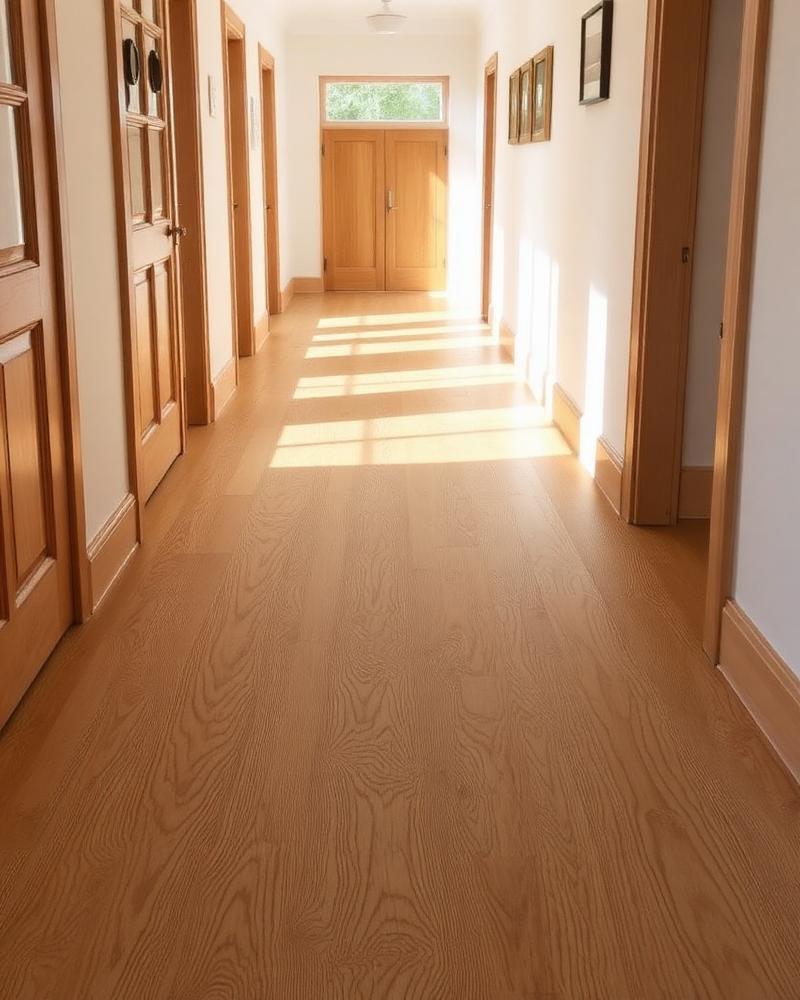
Wood Flooring
Engineered and solid wood floors, fitted to last
Woodpecker and Kersaint Cobb oak, walnut and ash — wide plank, herringbone and chevron, installed across Surrey, West Sussex and Hampshire.
Real timber is still the most characterful floor you can put in a house. It ages rather than wears out, it can be refinished decades later, and no printed surface quite matches the depth of a brushed and oiled oak board in low winter light.
Engineered board is what we specify for most homes. A hardwood wear layer over a stable plywood core moves far less with humidity than solid timber, which makes it suitable over underfloor heating and across open-plan spaces where solid boards would cup or gap.
Fitting method matters as much as the board. Depending on the subfloor and the room we glue down, secret-nail or float, and we always allow for expansion at the perimeter. Skirting, thresholds and door undercuts are detailed as part of the job.
The range
Choosing the right specification.
Wide plank oak
180–260mm boards in brushed, oiled or lacquered finishes. Calm and contemporary in open-plan rooms.
Herringbone
Classic parquet geometry in engineered oak — the single most transformative floor for a hallway or kitchen.
Chevron
Mitred points for a sharper, more tailored version of parquet. Slower to lay, striking in the right room.
Smoked & fumed
Deeper, warmer tones achieved through the timber rather than a surface stain, so wear doesn't show pale.
Solid timber
Traditional solid oak and walnut where the subfloor and environment suit it, typically in period properties.
Restoration & refinishing
Sanding, staining and re-oiling existing timber floors where the board still has life in it.
What to consider
Honest advice before you commit.
Engineered over solid, usually
Engineered board handles heating, humidity and modern subfloors far better. We only recommend solid where the setting genuinely calls for it.
Finish changes maintenance
Oiled floors can be spot-repaired and refreshed; lacquered floors resist marks longer but need full sanding to renew. We talk through both.
Moisture testing first
Screeds and older subfloors are tested before timber goes down. Laying onto a damp base is the most common cause of failure.
Expansion gaps are essential
Timber moves seasonally. Perimeter gaps concealed under skirting or beading prevent cupping and lifting later.
Common questions
Quick answers.
- Is engineered wood as good as solid wood?
- For most modern homes it is better. The hardwood wear layer looks identical, but the engineered core is far more stable over underfloor heating and across large open spaces, and it can still be sanded and refinished.
- Can wood flooring go over underfloor heating?
- Engineered wood can, provided the floor temperature stays within the manufacturer's limit and the system is commissioned gradually. Solid timber generally should not.
- How do I clean a wood floor?
- Sweep or vacuum regularly with a soft head, and damp-mop with a pH-neutral wood cleaner. Avoid steam mops and standing water, which open the joints.
- How long does wood flooring last?
- A well-installed engineered oak floor lasts 30 years or more and can usually be sanded two or three times. Solid timber can last a century.
- Do you fit Woodpecker flooring?
- Yes — we supply and fit the Woodpecker range alongside Kersaint Cobb and V4, across Surrey, West Sussex and Hampshire.
We'll bring the samples to your home.
Free measure, free quotation, no pressure — across Surrey, West Sussex and Hampshire.